

Canada just announced new tariffs on US goods. Here’s how the growing trade war could hurt Americans
On September 8, Canada is set to enact tariffs ranging from 15% to 50% on over 700 American goods in an effort to match US tariffs dollar for dollar, Canadian officials announced on Tuesday.
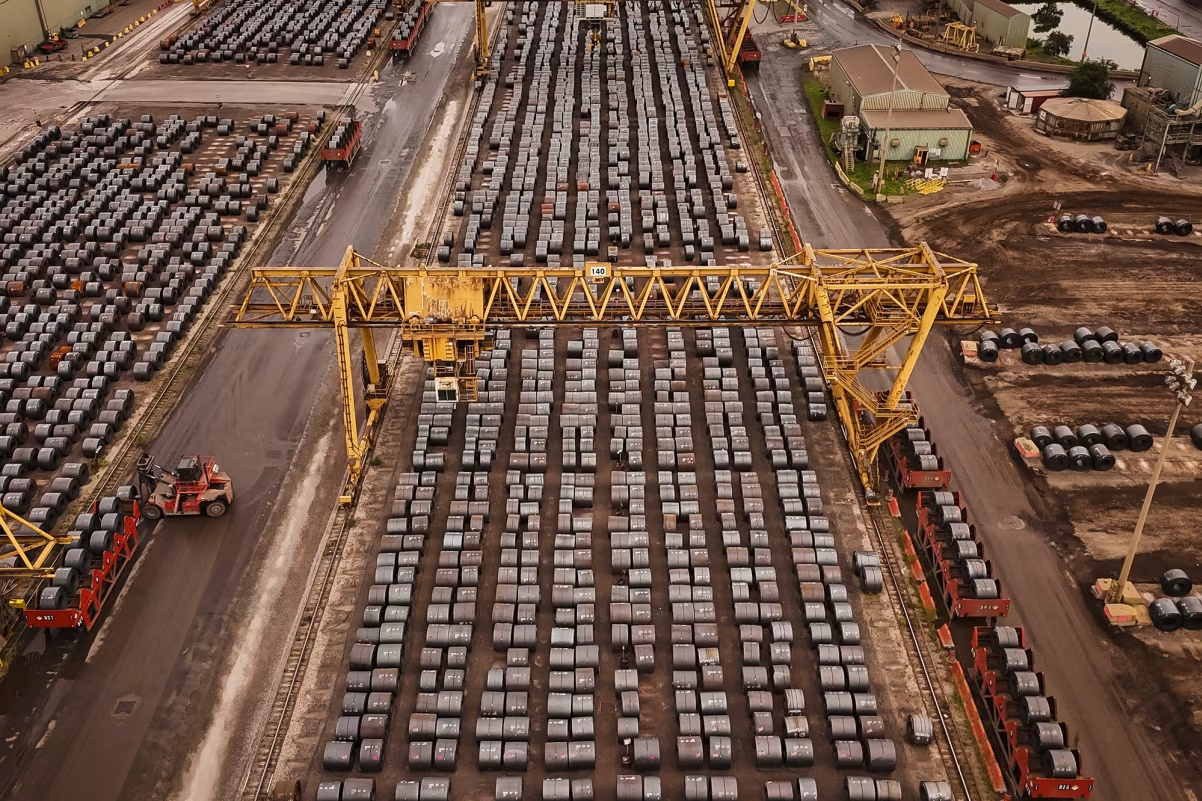
Notably, Canada is doubling its duties on US steel and aluminum to 50%, in line with the 50% tariffs the US had already imposed on Canadian steel and aluminum before the latest round of US tariffs. Canadian officials framed the move as a means of protecting Canadian manufacturing.
The duties the US recently imposed on Canadian goods “will have real consequences for Canadian workers, businesses, and communities across our nation,” Canadian Finance Minister François-Philippe Champagne said in a press conference on Tuesday. “Canada must respond, and today we are in a proportionate, targeted, and strategic way.”
Canadian Industry Minister Mélanie Joly suggested that the levies were selected with upcoming US midterm elections in mind. “We’re also targeting products that will target states in the US. And so we’re being wise and strategic to put political pressure, and that’s why we think it’s the right thing to do right now,” she told reporters on Tuesday.
These types of retaliatory tariffs are just some of the arrows Canada has in its quiver in a growing trade war with the United States.
Beyond tariffs, Canada also has other tools at its disposal, including restrictions on key exports to the United States.
Here’s what Canada is doing now, what could come next — and what each move could mean for Americans.
The first move: tariffs
Besides steel and aluminum, the retaliatory tariffs are concentrated on sectors such as paper products, construction materials, home appliances and agricultural products, including dairy and seafood.
In total, the latest American tariffs cover about 5% of the goods the US imported from Canada last year, while Canada’s tariffs cover about 6% of the goods the US exported to Canada, according to US trade data.
Overall, Canada is the second-largest export market for American goods and is among the top destinations for many of the goods targeted by the new import duties.
For example, Canada was the largest export market for US household appliances last year, purchasing more than $1 billion worth of the goods, most of which will now face a 25% tariff.
In announcing the retaliatory actions, Canadian officials also unveiled a $7.5 billion CAD (around $5.4 billion USD) package to support domestic businesses harmed by the new duties.